
How Cleaner Combustion Supports Fuel Economy
Every gas or diesel engine depends on combustion to create power. Fuel enters the engine, mixes with air, and burns inside the cylinders. The energy created by this process moves the vehicle.
For the engine to run well, it needs the proper amount of fuel and air at the right time. The fuel also needs to be delivered in a fine, controlled spray.
If the fuel does not burn as completely as it should, the engine may not use it as efficiently. Performance, emissions, and fuel economy may all be affected.
Cleaner combustion starts with regular maintenance and a properly operating fuel system. A quality fuel treatment can provide added support by helping control deposits and supporting cleaner fuel delivery.
What Is Incomplete Combustion?
Complete combustion is the goal, but an engine does not burn every drop of fuel under perfect conditions.
Incomplete combustion occurs when part of the fuel does not burn fully. This may happen when the mixture of fuel and air is not correct or when the fuel is delivered unevenly.
Worn spark plugs, dirty injectors, faulty sensors, low compression, and other engine problems can affect combustion. Cold starts, short trips, heavy loads, and engine design can also make a difference.
The Environmental Protection Agency has identified poor ignition, fouled spark plugs, and fuel mixtures that are too rich or too lean as possible causes of incomplete combustion.
An engine that is not burning fuel properly may idle roughly, respond slowly, produce more exhaust smoke, or use more fuel. These symptoms should be checked, especially if the check-engine light comes on.
Why Fuel Injector Spray Matters
Fuel injectors deliver fuel through very small openings. The fuel should leave the injector as a fine and controlled spray.
A fine spray creates tiny droplets that mix more easily with air. When the fuel and air mix properly, combustion can happen more evenly.
Research from the U.S. Department of Energy explains that improved fuel atomization can help air mix with fuel, reduce soot formation, and improve combustion efficiency.
Deposits can interfere with this process. They may change the injector’s spray pattern or restrict the amount of fuel flowing through it.
Instead of a fine mist, a dirty injector may produce an uneven stream. This can result in a less even burn inside the cylinder.
How Fuel-System Deposits Develop
Deposits can develop during normal engine use. Heat, fuel quality, engine design, maintenance history, and driving habits can all play a part.
Some deposits form around injector tips. Others may form inside the fuel system or combustion chamber. The amount and type of buildup will vary between vehicles.
Gasoline sold in the United States contains detergent additives to help control deposits. However, fuel quality and detergent levels can vary.
Using quality fuel can help keep the system cleaner. Regular maintenance and a suitable fuel treatment may provide additional support.
Fuel treatment cannot remove every type of buildup. A product placed in the fuel tank may not clean heavy carbon from parts of the engine that the treated fuel does not reach.
What Are Some Ways to Improve Engine Efficiency and Fuel Economy?
There is no single change that will deliver the best fuel economy in every vehicle. The most reliable approach is to combine good maintenance with better driving habits.
Keep the engine serviced according to the owner’s manual. Use the recommended grade of motor oil, replace worn spark plugs, and change filters when required. Address warning lights instead of waiting for the problem to become worse.
Keep the tires inflated to the pressure listed on the driver’s door sticker. Underinflated tires create more rolling resistance and make the engine work harder.
Remove unnecessary weight from the trunk or truck bed. Roof racks and cargo boxes can also increase wind resistance, especially at highway speeds.
Avoid rapid acceleration, hard braking, and long periods of idling. Plan trips so the engine spends less time running in traffic or making several short drives.
According to FuelEconomy.gov, using the recommended grade of motor oil may improve fuel economy by 1 to 2 percent. Proper tire pressure can also provide a smaller but useful improvement.
Individual results will vary, but these basic steps can work together to support efficiency.
Will Fuel Injector Cleaner Help Fuel Economy?
Fuel injector cleaner may help when injector deposits are causing the engine to lose efficiency.
If deposits affect the injector spray, the engine may not deliver and burn fuel as evenly as it should. Cleaning those deposits may help restore a more controlled spray pattern.
A driver might notice smoother idling, better throttle response, or improved mileage if dirty injectors were part of the problem. A vehicle with an already clean fuel system may show little or no noticeable change.
Fuel injector cleaner cannot increase fuel economy beyond what the engine and vehicle can normally provide. It also cannot repair a damaged injector, weak fuel pump, bad sensor, worn spark plug, or other failed part.
It is better to view fuel treatment as a way to support or restore normal operation, not as a guaranteed mileage booster.
Track fuel economy over several tanks before deciding whether anything has changed. Weather, traffic, load, and driving conditions can cause mileage to move up or down from one tank to the next.
What Wastes the Most Gas in a Car?
Aggressive driving can waste a large amount of fuel. Fast acceleration and hard braking require the engine to use more energy than smooth and steady driving.
High speeds also increase wind resistance. The faster a vehicle travels, the harder the engine must work to push it through the air.
Long periods of idling waste fuel because the engine is running while the vehicle is not moving. Carrying unnecessary weight, driving with low tire pressure, and using a large roof carrier can add to fuel use.
Mechanical problems may also waste fuel. Misfires, faulty sensors, dragging brakes, dirty injectors, and other issues can reduce efficiency.
The biggest source of wasted fuel will depend on the vehicle and how it is driven. For one driver, it may be speeding and hard acceleration. For another, it may be idling, low tire pressure, heavy loads, or a needed repair.
A fuel treatment cannot correct waste caused by driving habits or mechanical damage. Fuel economy improves most when the entire vehicle and the person driving it work together.
Cleaner Combustion Is Part of Engine Care
Cleaner combustion does not depend on one product or maintenance step. It depends on the fuel system, ignition system, air supply, engine condition, and computer controls working together.
Oil changes protect moving engine parts, but they do not clean fuel injectors. Fuel treatment may support injector cleanliness, but it does not replace fresh oil.
A clogged filter still needs to be replaced. Worn spark plugs need proper service. A damaged injector, bad sensor, or weak fuel pump needs to be repaired.
Follow the maintenance schedule in the owner’s manual. Pay attention to fuel odors, leaks, hard starting, smoke, warning lights, and changes in performance.
Taking care of smaller problems early may help protect the engine and prevent more expensive repairs.
Support Cleaner Combustion With Fuel Factor X
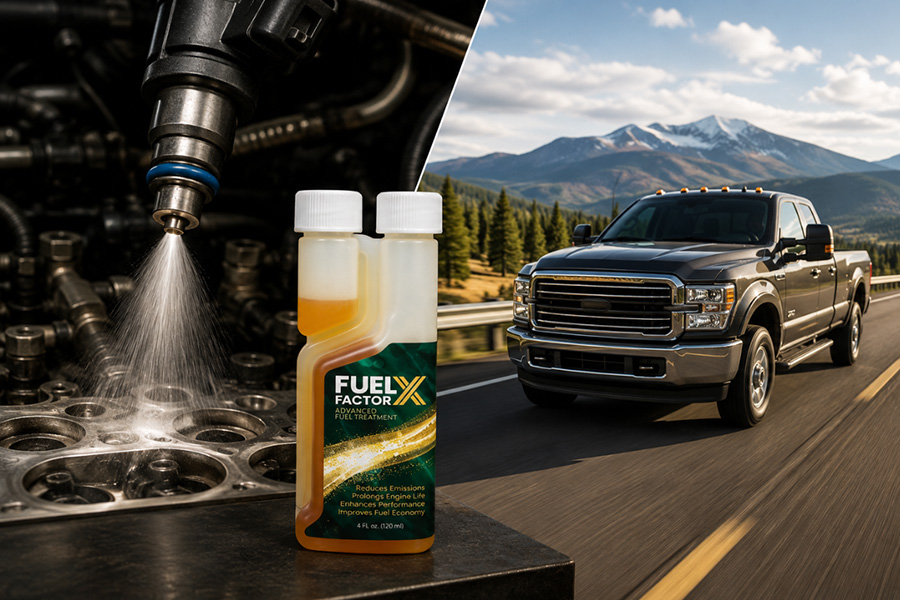
Fuel Factor X is a concentrated fuel treatment designed for gas and diesel engines. It is made to support fuel-system cleanliness and help fuel burn more completely.
As the treated fuel moves through the system, Fuel Factor X helps support cleaner fuel delivery and more consistent combustion. It can be added during a fill-up as part of a regular engine-care routine.
Because Fuel Factor X is concentrated, use the amount listed in the package instructions. Adding more than recommended is unnecessary and does not guarantee better results.
Fuel Factor X does not replace oil changes, filters, tune-ups, good driving habits, or manufacturer-recommended service. It complements these important steps by adding fuel-system care to a complete maintenance plan.
When injectors deliver fuel in a clean, controlled spray and the engine is properly maintained, the vehicle has a better chance of making good use of every tank.
Results vary based on engine condition, maintenance history, fuel quality, driving habits, vehicle type, load, and product use.